
Those chalky white marks on your taps, the cloudy film on the shower glass and the crusty ring around tile grout are usually mineral deposits left behind by hard water. The good news: a mild acid such as white vinegar or lemon juice, a bit of patience and the right scrubbing tool will remove most of them, and a few small habits will stop them coming back so quickly.
Below: what causes the stains, step-by-step cleaning for taps, tiles, glass and shower heads, and a few tools that make the job lighter.
What causes hard water stains?
Hard water is water that carries a lot of dissolved minerals, mainly calcium and magnesium. Homes that rely on borewell or groundwater supplies often notice it most. When a drop of that water dries on a surface, the water evaporates but the minerals stay behind.
Over weeks, those drops build up into familiar layers:
- Limescale: a hard, white or off-white crust, most obvious around tap spouts, the base of taps and shower head nozzles.
- Water spots: cloudy circles on glass, mirrors and steel, where individual drops dried.
- Soap scum: a greyish, slightly sticky film that forms when minerals react with soap. It clings to shower screens, tiles and the edges of buckets.
- Brown or orange marks: if your water also carries iron, deposits can take on a rusty tint, especially in toilets and under taps.
Because the deposits are mineral rather than greasy, ordinary soap barely touches them. You need something that dissolves minerals, plus gentle scrubbing.
Do vinegar and baking soda work?
Yes, but they do different jobs, and they work best used one after the other rather than mixed together.
White vinegar: the main tool
Limescale is mostly calcium carbonate, which dissolves in mild acid. Plain white cooking vinegar is acidic enough to loosen most household deposits if you give it time. Lemon juice works too, though it is usually weaker. Contact time is the key: a quick spray-and-wipe does very little, so keep the surface wet for 10 to 15 minutes on light marks and up to an hour on thick crust.
Baking soda: a gentle scrub
Baking soda does not dissolve scale. Mixed into a paste with a little water, it works as a mild abrasive that helps lift loosened deposits and soap scum.
Why not mix them?
The fizz looks impressive, but the two largely neutralise each other. Use vinegar first, rinse, then a baking soda paste on anything stubborn. For years-old build-up, a descaler labelled for your surface can save time; follow its label exactly.
Before you start: protect your surfaces and yourself
Acids attack minerals, and some surfaces are made of minerals too. A few checks prevent damage you can’t undo.
- Avoid acids on natural stone. Marble, granite, limestone and similar stone can etch or lose their polish. Use a cleaner made for stone instead.
- Check special tap finishes. Standard polished chrome usually handles diluted vinegar well, but coloured, matte, brushed or plated finishes may not. Check the manufacturer’s care instructions and test on a hidden spot first.
- Go easy on grout. Repeated long soaks in acid can wear grout. Rinse well after cleaning.
- Never mix cleaners. Do not combine vinegar or any acidic product with bleach or bleach-based cleaners, as this can release harmful gas. Use one product, rinse thoroughly, then use the next if needed.
- Ventilate and wear gloves. Open a window or run the exhaust fan, and wear rubber gloves for longer cleaning sessions.
This is general cleaning information, not professional or safety advice. Always follow the instructions from the manufacturer of your fittings and of any cleaning product you use.
Step-by-step: how to remove hard water stains
Taps and spouts
- Soak a cloth or a few paper towels in white vinegar.
- Wrap them around the tap base and spout. For the spout tip, a small vinegar-filled bag held with a rubber band works well.
- Leave for 30 to 60 minutes.
- Remove the cloth and scrub the joints and edges with an old toothbrush.
- Rinse and dry with a soft cloth.
If water sprays sideways, the aerator (the mesh at the tip) is probably clogged. Many unscrew by hand for a vinegar soak.
Bathroom and kitchen tiles
- Mix white vinegar and water in equal parts in a spray bottle.
- Spray the stained area generously and wait 10 to 15 minutes. Spray again if it starts to dry.
- Scrub with a stiff brush, especially grout lines and the lower, most-splashed tiles.
- Rinse, then dry. On big tiled areas, a powered scrubbing brush saves a lot of effort.
Glass shower screens and mirrors
- Spray undiluted or diluted vinegar over the glass.
- Wait 10 minutes, then wipe with a non-scratch sponge, working from top to bottom.
- For stubborn soap scum, use a little baking soda paste on the sponge, using light circular movements.
- Rinse and dry with a microfibre cloth or squeegee to avoid leaving fresh water spots.
The outside of upper-floor windows is harder to reach; a magnetic window brush can help there.
Shower heads
Weak or uneven jets usually mean scale in the nozzles. Tie a vinegar-filled bag around the head so it is submerged, leave it for about an hour (check the care instructions for any limit), then run hot water through it. Rubbing soft silicone nozzles with your thumb helps push out loosened scale.
Products worth considering
None of these replace the basic method above, but each can make a particular part of the job easier. The details below come from the product descriptions. You can read how we choose products for more on how items are picked for the site.
5 in 1 Multi-Functional Electric Cleaning Brush
This cordless, rechargeable scrubber comes with five interchangeable heads, described as a flat brush, a corner brush, a round brush, a sponge head and a scouring pad. It has adjustable speed settings and a waterproof design, and the listing names grout, tiles, bathtubs, sinks and soap scum among the jobs it is meant for.
Good to know:
- Lightweight ABS body with a silicone grip intended to stay secure in wet hands.
- Five heads let you switch between broad tile areas, corners and gentler surfaces.
- The listing advises charging it fully before first use and wiping the brush itself with a damp cloth.
- Use the sponge head, not the scouring pad, on glass, mirrors and plated fittings.
See details and buying options
Magnetic Brush for High-rise Single Glazed Windows
This is a two-part, double-sided magnetic cleaner: one half sits inside, the other on the outside of the glass, so you can clean the outer surface while staying in the room. It is described as suitable for single-glazed glass 3 to 8 mm thick, with a triangular shape for reaching corners. Besides windows, the listing mentions fish tanks, skylights, patio doors, mirrors, tiles and shower screens.
Good to know:
- Measure your glass thickness first: it is meant for single-glazed panes of 3 to 8 mm.
- The description notes it works better when you spray glass cleaner first, which also suits a vinegar spray for water spots.
- It wipes rather than dissolves, so very thick spots may still need a soak beforehand.
- On upper floors, work carefully so the outer half cannot drop if the magnets separate.
See details and buying options
Floor Cleaning Paper Soap for Home, Kitchen and Bathroom Tiles
These are concentrated cleaner sheets that dissolve in water to make a floor-cleaning solution. The listing describes them as low-foam, easy to rinse and free of fluorescent agents, for sealed hard floors such as tile, marble, wood and laminate. It is a general floor cleaner for dirt, grease and footprints rather than a limescale remover.
Good to know:
- Compact sheets in a box, easy to store in a small bathroom cupboard.
- Low foam means less rinsing, which helps avoid leaving fresh residue on tiles.
- Best for the routine mop between deeper descaling sessions.
- Keep the box dry, as the sheets are designed to dissolve in water.
See details and buying options
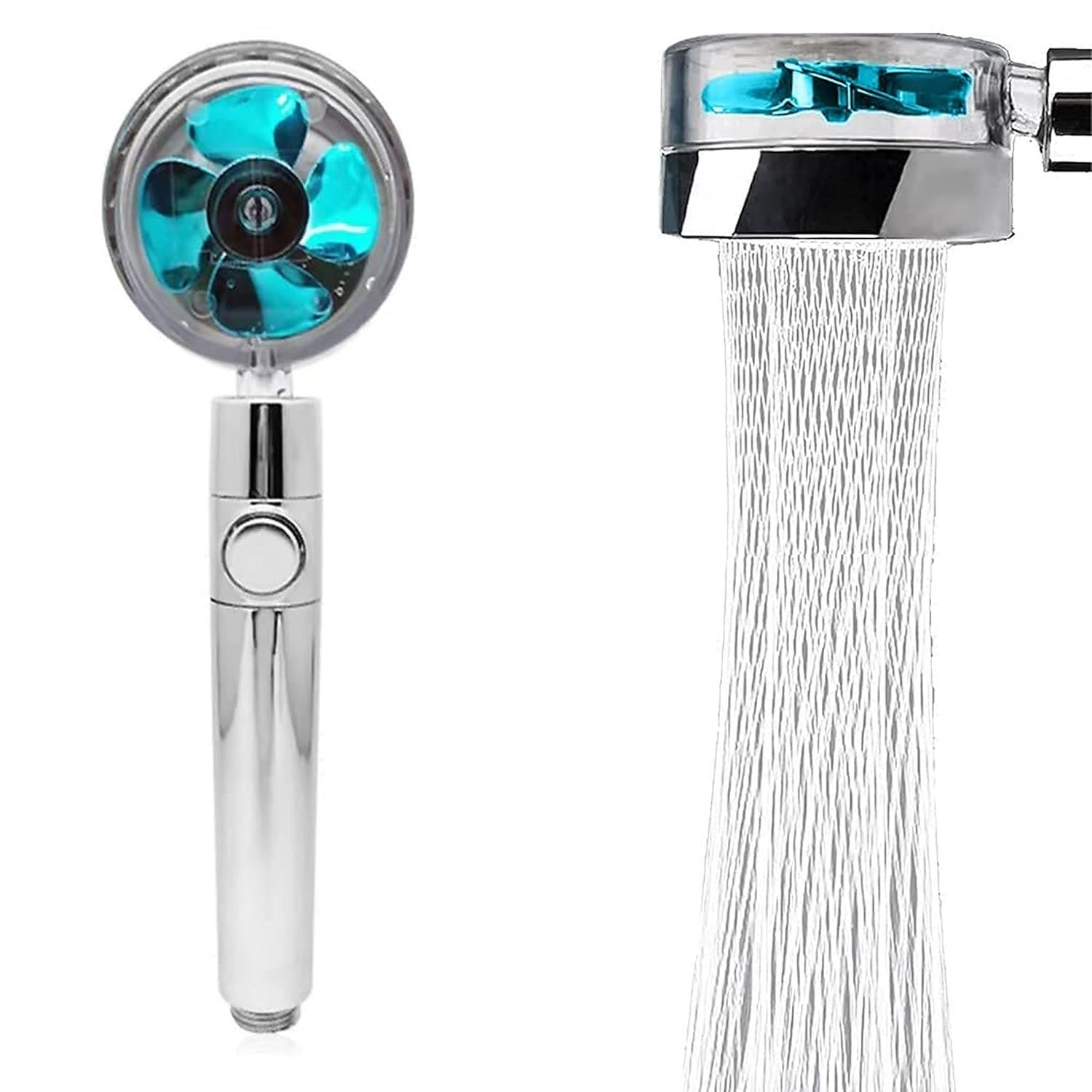
High-Pressure 360° Rotating Water Saving Shower with 2 Filter Option
If your old shower head is badly scaled up, replacing it can be simpler than reviving it. This hand shower is made of ABS with a stainless steel panel, rotates 360 degrees and has a propeller-driven “turbo” water mode. It includes PP cotton filter elements and is described as screwing onto a standard shower hose without tools.
Good to know:
- Comes with two PP cotton filters, which the listing says remove impurities from the water.
- A sediment-type filter is not the same as a water softener, so don’t expect it to stop limescale on its own. Plan to descale it and change the filter cotton periodically.
- Designed to give a strong flow even at low water pressure.
- Check that your shower hose has a standard fitting before you buy.
See details and buying options
Quick comparison
| Product | Main features | Best suited for | Things to check |
|---|---|---|---|
| 5 in 1 Multi-Functional Electric Cleaning Brush | Cordless, rechargeable, 5 heads, adjustable speed, waterproof | Tile walls, grout, bathtubs, sinks | Pick a soft head for glass and plated finishes; charge before use |
| Magnetic Brush for High-rise Single Glazed Windows | Double-sided magnetic, triangular corners, cleans outside from inside | Windows, shower screens, mirrors | Glass must be single-glazed, 3 to 8 mm thick |
| Floor Cleaning Paper Soap | Dissolvable sheets, low foam, easy rinse | Routine mopping of tiled and sealed floors | Not a descaler; store dry |
| High-Pressure 360° Rotating Water Saving Shower | 360° rotation, turbo mode, 2 PP cotton filters, tool-free fitting | Replacing a scaled-up shower head | Hose fitting; filter is not a softener |
You can browse more fittings in our bathroom accessories section and handy cleaning helpers in Daily Life Hack.
How to stop hard water stains coming back
Dry surfaces after use
The most useful habit: a squeegee on the shower glass and a dry cloth over the taps takes under a minute and removes water before minerals are left behind.
Clean little and often
A light vinegar spray and wipe once a week stops thin films hardening into crust.
Fix drips and improve airflow
A dripping tap leaves a constant trail of minerals, so get it repaired. An exhaust fan or open window after a shower helps surfaces dry.
Consider the water itself
If stains return within days despite good habits, your water may be very hard. A water softener tackles the cause; ask a qualified plumber or water treatment specialist what suits your supply.
Frequently asked questions
How long should I leave vinegar on hard water stains?
Around 10 to 15 minutes for light spots and soap film, and 30 to 60 minutes for thick limescale on taps or shower heads. Keep the surface wet throughout, then scrub and rinse.
Can I use vinegar on every tap and tile?
No. Avoid it on marble, granite and other natural stone, and check the care instructions for coloured, brushed or plated tap finishes. When unsure, test a small hidden area first.
How often should I descale a shower head?
It depends on how hard your water is. Many homes find every one to three months works well. If the spray pattern becomes uneven or weak, it is time for a soak.
Does a shower filter stop hard water stains?
Not on its own. Basic sediment filters, such as PP cotton, are designed to trap particles rather than remove the dissolved minerals that cause scale. Drying surfaces and regular light cleaning remain the most reliable ways to keep stains down.
The bottom line
Hard water stains are mineral deposits: soften them with a mild acid, scrub gently, rinse and dry. Protect stone and special finishes, never mix cleaners, and keep up a quick weekly wipe. The right tools make the work lighter, but habits are what keep taps, tiles and glass clear.



One Response