
In a small home, the trick is not to own less storage but to make every wall, corner and shelf top earn its place. The products that help most are the ones that stack, fold away when you don’t need them or use space you were ignoring, such as the area above a TV or the corner of a bathroom.
This guide covers simple ways to free up room, a shortlist of space-saving products from our catalogue, and what to measure before you buy anything.
Start with a plan, not a purchase
It is tempting to order a stack of organisers and hope the clutter sorts itself out. In a compact flat that usually makes things worse, because every new box takes up floor space too. A little planning first means you only buy what will actually fit and get used.
Sort what you own first
Go room by room and group items into three piles: things you use every day, things you use occasionally (festival decorations, spare bedding, seasonal clothes) and things you can give away. Everyday items need easy-to-reach storage. Occasional items can go higher up, under furniture or into bins that stack.
Measure the space you want to use
Write down the width, depth and height of each spot you plan to fill: the gap beside the wardrobe, the area by the front door, the corner of the shower, the space under the sofa. Note where doors and drawers swing open, so a new rack doesn’t block them. With those numbers in hand, it is much easier to rule products in or out.
The best ways to save space in a small home
Most space-saving ideas fall into a few simple approaches. You don’t need all of them; pick the ones that suit how your home is laid out.
Build upwards
Floor space is limited, but wall height usually isn’t. Tall, narrow racks and storage that stacks let you keep the same number of things on a smaller footprint. Keep heavier items at the bottom so the stack stays steady.
Use corners and walls
Corners are often empty because standard furniture doesn’t fit them. Corner shelves, especially ones that stick on rather than need drilling, turn that dead zone into useful storage. This is handy for renters who can’t make holes in the walls.
Choose things that fold flat
Collapsible bins and foldable racks are useful when your needs change. Guests arriving, a festival clear-out or a house move can all call for extra storage for a short time; afterwards, the organiser folds away instead of taking up a corner permanently.
Look for overlooked spots
The top of a TV or monitor, the space under a sofa or bed, and the inside of wardrobe shelves can all hold more than they do now. Small, light items such as remotes, chargers or folded clothes are good candidates for these spots.
Products worth considering
The products below are listed in our Smart Home and Daily Life Hack categories. The notes are based on each product’s listed features, so check the full details and measurements on the product page before you decide.
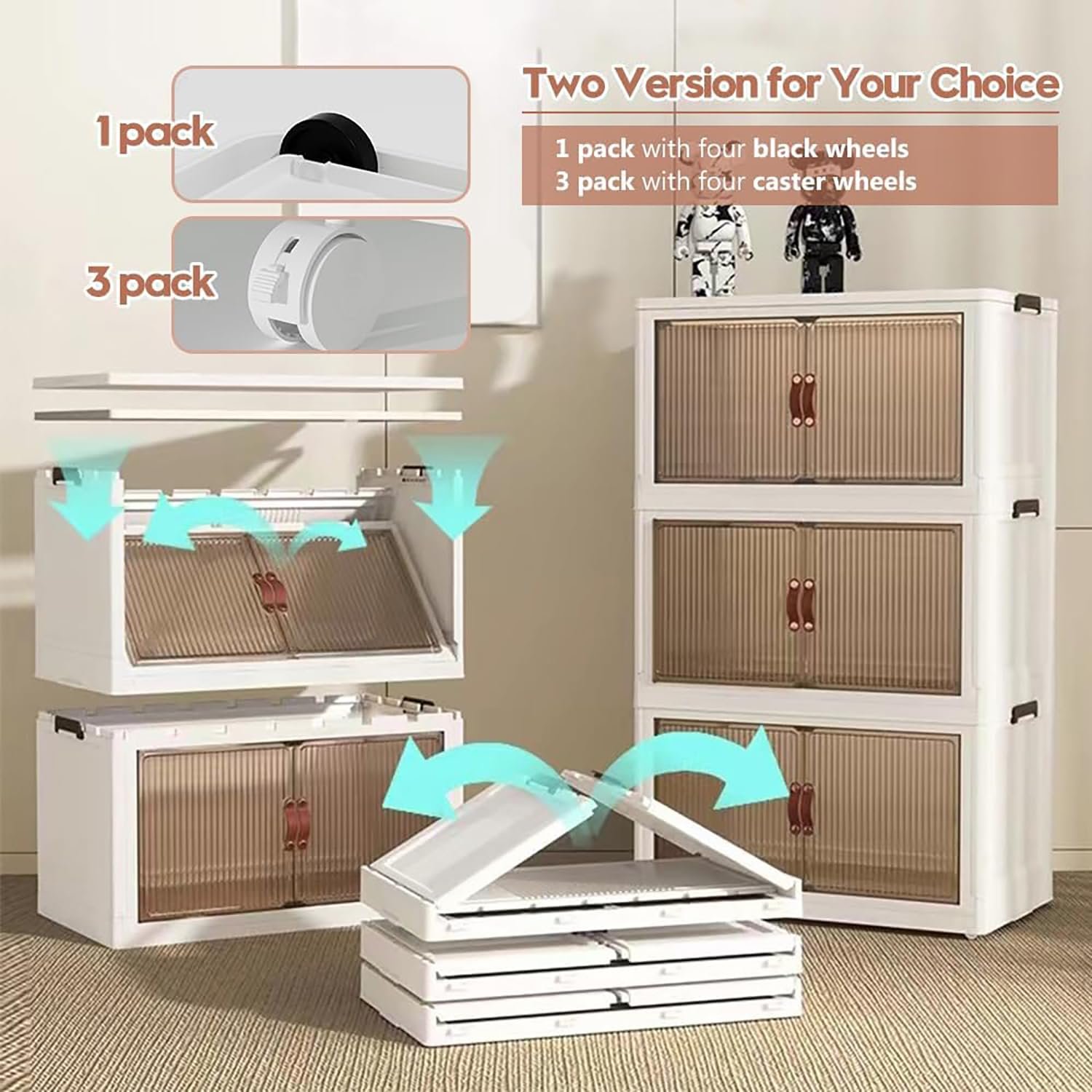
Plastic Storage Organizers: Stackable Storage Bins with Open Front Door
These bins arrive flat and are put together by raising the side panels and fitting the lid, with no tools needed. Each one opens from the top and also has two front doors, so you can take something out of a lower bin without lifting off the ones stacked above it. When you no longer need them, they fold down small enough to slide under a sofa.
- Grooves on the bins help them stack without tipping over
- Front doors have a safety latch to keep things in place when you move the bins
- The see-through design makes it easier to spot what is stored inside
- The listing mentions wheels for moving it around and says it wipes clean with a damp cloth
- Consider: measure the height of a full stack against the space you have, and keep heavier items in the lower bins
See details and buying options
Collapsible Fabric Storage Cubes Organizer with Handles
These fabric cubes are made for open shelves and wardrobe sections, where loose clothes, toys or magazines can quickly look messy. The listing describes a linen fabric outer, a steel frame along the two long sides and a thickened base to help the cube keep its shape. The frames fold down so the cubes can be stored flat when empty.
- Handles make it easy to pull a cube off a shelf or carry it to another room
- Suggested uses include clothes, toys, books, magazines and nursery items
- Simple, plain look that suits bedrooms and living rooms
- Consider: measure your shelf depth and height so the cubes slide in fully, and remember fabric is better suited to dry areas than to bathrooms
See details and buying options
No Drilling Foldable Rack, 180 Degree Rotating
This rack sticks to the wall instead of being screwed in, which makes it a sensible option for rented homes. Its two shelves can rotate, so you can mount it flat on a wall or fit it into a corner, a spot that often goes unused in small bathrooms and kitchens. The shelves have drain holes, and the shelf part lifts out for cleaning.
- Uses an adhesive backing that needs a clean, smooth surface
- The listing says it can be removed by warming the adhesive with a hair dryer
- Suggested for the toilet, kitchen, dressing area or bedroom
- Consider: adhesive racks don’t suit rough, painted-over or crumbling surfaces, so check your wall or tiles first and don’t overload it
See details and buying options
5-Layer Collapsible Shoe Rack
Shoes piled by the front door are one of the most common sources of clutter in Indian homes. This rack has five shelves in a bamboo frame and an X-shaped folding structure: you pull it open to use it and fold it back when you want it out of the way. No tools are needed to set it up.
- Made from bamboo, which the listing describes as carbonised for hardness
- Five layers let you store more pairs on the same floor area
- Can also hold books, towels, bags, plants or kitchen items
- Consider: check the shelf depth against your largest shoes, and keep it away from spots that stay wet, such as right beside a bathroom door
See details and buying options
Adjustable Non Slip TV Screen Top Storage Shelf
This small shelf sits on top of a TV or computer monitor, using space that is normally left empty. It is meant for light items such as remotes, a router, a calculator or a small plant, which helps clear the table below. It can also be used as a phone stand.
- Adjustable design that fits on top of a TV or computer screen
- Two-leg support with silicone-covered feet to help avoid scratching the screen
- Fitted and removed without tools
- Consider: check that it suits the thickness and shape of your screen’s top edge, and keep only light items on it
See details and buying options
Quick comparison
| Product | Main features | Best suited for | Things to check |
|---|---|---|---|
| Stackable Storage Bins with Front Door | Stackable, collapsible, two front doors with latches, top lid | Bedrooms and storerooms; clothes, linen and toys | Height of the full stack; keep heavy items low |
| Collapsible Fabric Storage Cubes | Linen fabric, steel side frames, handles, folds flat | Open shelves and wardrobes | Shelf depth and height; dry areas only |
| No Drilling Rotating Rack | Adhesive mount, rotating shelves, drain holes, removable shelf | Bathroom and kitchen corners, rented homes | Smooth, clean surface; weight of items |
| 5-Layer Collapsible Shoe Rack | Bamboo, five layers, folds open and shut, no tools | Entrances, wardrobes, balconies | Shelf depth for your shoes; keep away from wet spots |
| TV Screen Top Storage Shelf | Adjustable, silicone feet, two-leg support | Living rooms and desks | Fit on your screen edge; light items only |
How to choose space-saving storage that is worth it
A space-saving product is only worth buying if it frees up more room than it takes. These questions help you decide:
- Does it solve a specific problem? “Shoes by the door” or “bedding with nowhere to go” is a clear job. “General storage” often ends up as another place for clutter.
- Will it fit with room to spare? Use your measurements and allow space to open doors, lids and drawers.
- How will you reach things? Front-opening bins and open shelves suit things you use often. Lidded or stacked storage suits items you only need now and then.
- Is the material right for the room? Plastic and racks with drain holes cope better with damp areas; fabric and bamboo do better in dry rooms.
- Can it be removed later? If you rent, no-drill and freestanding options let you take your storage with you when you move.
- Is it easy to clean? Dust builds up quickly in small spaces, so wipe-clean surfaces and removable shelves save effort.
For more on how we pick the products we feature, read how we choose products. If you’re putting a rack in the bathroom, our guide on removing hard water stains from taps, tiles and glass explains how to get tiles clean, which helps before you stick anything to them.
Frequently asked questions
What is the easiest way to make a small room feel bigger?
Clear the floor as much as possible. Moving things onto walls, into stacking bins or under furniture makes a room feel more open, even if you keep the same number of things.
Are no-drill adhesive shelves strong enough?
They suit everyday items such as toiletries and kitchen bottles, as long as they are stuck to a clean, smooth, dry surface. Follow the manufacturer’s instructions, give the adhesive time to set if they say so, and avoid loading them with heavy items.
Is fabric or plastic storage better for a small home?
Fabric cubes look neater on open shelves and fold away easily, but they are best kept in dry rooms. Plastic bins are easier to wipe clean and stack, so they are often more practical for storerooms and lofts.
How do I stop storage bins from becoming clutter themselves?
Give each bin one job, label it if the contents aren’t visible, and go through it every few months. If a bin stays empty for a long time, fold it away until you need it.
Final thoughts
Saving space in a small home comes down to three steps: sort what you own, measure the spots you want to use and choose storage that stacks, folds or fits places you weren’t using before. Start with the area that bothers you most, whether that is the shoe pile by the door or the cluttered TV unit, and build from there. A few well-chosen pieces usually do more than a room full of organisers.


One Response